Wednesday, 13 August 2014

Challenges Facing the Youth in Today’s Society

Most of the problems facing today’s youth are not restricted to any one ethnic or religious group, but affect young people generally. Most discussions on youth have focussed on issues such as drug abuse, crime, violence, sexuality and poverty. In addition to these, today’s youth are afflicted by new challenges.
These include:
1.     An Identity Crisis: Who am I?
2.     Lack of self confidence and low self esteem: I am worthless
3.     A sense of hopelessness: Where am I   going?
4.     Confusion and ambiguity concerning moral issues: What is right and wrong?
5.     The negative impact of the electronic media: Entertainment?
6.     Competitiveness in education: the uneven playing field: Excellence by whom? Not Me.

Muslim Youth
The Quran and life of the Prophet give numerous examples of outstanding youth.
Islam praised the efforts of the youth in reviving religion through calling to the worship of God and fighting against disbelief as a form of backwardness and corruption.
Indeed the image of Abraham peace be upon him in the Quran is one of extreme inspiration, enlightenment and uniqueness. It is the image of a young man rebelling against his people’s decadent traditions, a young man defying the dominant values of his society even in the form of a tyrant king who claims divinity. His son Ismail inherited these qualities of sincerity in worshipping Allah and sacrifice of everything for His sake, as clear in the story of the sacrifice when his father consulted him upon seeing in his dream that he is to sacrifice him, and he answered with determination and certainty to obey Allah’s command “Oh my father, do as you are commanded, you will find me, if Allah so wills of the steadfast”.
Again, facing the despotism of Pharoah, those who dared to declare their faith were a group of youth who defied Pharoah and joined Moses “And none believed in Moses except some children of hid people because of fear of Pharoah and his chiefs, lest they should persecute them”.
The mission of Muhammad peace be upon him was also one for the youth as the eldest of those who first believed in the prophet was Abu Bakr as Siddiq who was only thirty five years old, and most had not reached the age of twenty, while some were as young as ten such as Ali Ibn Abi Talib.
Because of the prophet’s interest in the youth, it was not surprising that the leader of the Muslim army following his death was Usama Ibn Zayd who was only sixteen years old, and India was later conquered by Mohamed Ibn Al-Qasim who was the same age. Indeed the Prophet peace be upon him said, speaking of the social classification of his followers, that he was supported by the young and poor, and rejected by the old and rich, for the latter are always powers of conservatism while the young and poor are usually forces of change and revival.

The Ideal Youth
One may define the ideal youth as a balanced individual exhibiting a highly spiritual life informed by absolute moral values and whose behaviour demonstrates qualities such as righteousness, honesty, humility and conscientiousness in everything he/she does. In this regard the Quran has reminded us more than once that "A man receives but only that for which he strives; that his endeavors will be judged, and only then will he receive his recompense in full." (Quran, 53:39-41)

Traditional Society
Historically, the older generation has managed to transmit their beliefs, values, traditions, customs, worldviews and institutions to the younger members of their societies. This was achieved largely because of the impact of agencies of socialization, such as the family, religion and the schools. Today the impact of these institutions has been challenged and undermined by new forces, particularly the internet and the television.

Dominant Culture
Is Trinidad and Tobago a “Religious” Society in the truest sense? Is God’s help sought at all times or do we conveniently call on God on special occasions as a mere formality?
In my view, we are witnessing an erosion of traditional systems and institutions. As such the family and religion now have a minimal impact on the average youngster. The values emphasized today include individualism, Godlessness, materialism, secularism and rationalism.
 It is the youth who are encountering the most serious challenge to his/her faith under the impact of godless culture of modernity.
Best minds in our society are not socialized by religious institutions. The emphasis is on competitiveness, academic success, career goals, income and social mobility
 Little or no attention is given to preparing tomorrows leadership. There is no emphasis is placed on critical thinking, problem solving.
We are preparing followers, imitator’s conformists, and not leaders, innovators or problem solvers.
The youth is being asked to give up certain family and social values that were an integral part of their identity, and adopt in its place a sense of self-alienation, and become a self-estranged imitator of everything "modern".

We need to pay close attention to the effects of secularism:  confining the role of religion to the private domain of the individual and creating a dichotomy between "religious" and "worldly," between "private" and "public." It denies religion and its mediating institutions any public function and influence in shaping matters of public policy.

Technology: internet and TV
We are witnessing a phenomenal advancement in technology over the last three decades, and our citizens are experiencing remarkable social and cultural change. This drastic change has generated psychological and social dislocations among many people. Moreover, technology has influenced the way we think about life in general and interpersonal human relations in particular. Certainly, religion should influence all aspects of our life. It regulates our relationship to God and fellow human beings. When religion is made insignificant and is reduced to one among many other forms of cultural expressions, then meaningful existence and interpersonal relationships that are cultivated by its presence are threatened. In its place personal greed and intensified forms of individuation breed self-centered and "first me" individualism. If these tendencies are not kept in check by concern for the well being of others, as taught by religion, it could lead to a self-serving, ego-centered individual.
Television in particular has gone beyond its mandate to assist the family and the school in providing visual aid and education to the young. It has taken upon itself to appeal to the destructive and disintegrative instincts, to provoke greed, unlimited self-gratification, and absence of moral restraint in its young audience.
There is a need for Muslims must to join other religiously minded groups in the agitation for more responsible TV programming and more media coverage of the human condition without the celebration of outrage and obscenities.
Religious groups must create alternate avenues for recreation and social interaction. There should be avenues where spiritual and social activities combine to make the average child a whole human being whose life is directed to God. Adults should ensure that he or she benefits and makes full use of the cultural resources of his or her society. This is a delicate task, and much research and brainstorming need to take place before we arrive at solutions.

Education System
There is need for re-structuring of the education system, so as to minimize competition and rivalry and thereby reduce feelings of marginalization and exclusion among low achievers. Also, there is need for reform of the curriculum so as to include universally desirable values that are necessary for producing well rounded, balanced and useful citizens.
Our present educational system has trivialized religious devotion and relativized moral commitment. Therefore, the youth of today does not have the moral guidance to be able to pursue the right course when faced with a moral dilemma.

Family
The parents, consequently, have to assume an active role in the moral development of their children. They need to become fully involved at every stage in the child's mental growth until he/she attains maturity. This involvement includes learning to communicate with the younger generation through their books and reading materials. Also, there is need for constructive entertainment and personal involvement in the selection of the types of entertainment (whether at home or outside). This is very critical and almost inevitable since there is enormous pressure on the children from outside their home to participate in undesirable activities.

According to the Wall Street Journal (April 6, 1990), on the average American parents spend less than fifteen minutes a week in serious discussion with their children. American fathers spend an average of seventeen seconds per day of intimate contact with their children. In Trinidad and Tobago, the figures may not be significantly better. Let us ponder about the undesirable effects of this trend of parental non-involvement and the absence of suitable alternatives.

In closing, let us recognize that we have a serious challenge on our hands: to ensure that today’s children (tomorrow’s adults) would experience a better world than we are living in today. We should all work towards this objective and not wait for a crisis to occur and then react, let us be prepared. 

BY YAHAYA N.D. KAABA

Monday, 11 August 2014

5 Public Relations Mistakes to Avoid

Customer rants on social media. Toxic petro-chemical spills. Politicians and business leaders behaving unethically. The media generate a 24-hour breaking news cycle of crises that public relations professionals try to mitigate on a daily basis. Sometimes, however, the public relations professionals may actuallymake a bad situation worse. Here are five ways that can happen.
1) Failure to Plan.
Something will go wrong at some point, so every organization should have a plan in place to prepare for situations like severe weather, labor, supplier, financing, mechanical issues, and user-generated content on social media and review sites that may damage their reputations. Whether the crisis situation involves tainted food products, faulty electrical parts, or extremely negative information on Internet and social media sites, organizations failing to prepare initial statements, news releases, and train their spokespeople to deal with these situations will see the crisis spiral out of control and damage their reputations.
2) Failure to Respond Quickly.
Bad situations do not just go away. Closely related to the failure to plan is the failure to respond quickly. Waiting for a problem to go away, or staying silent and hoping the crisis will blow over, only makes the situation worse. There’s a chance the problem may spiral out of control, and the company will be perceived as negligent and irresponsible.
3) Failure to Listen.
Public relations professionals need to be able to empathize and problem solve. When conditions may entail negative outcomes, PR professionals need to know the factual accounts of the incidents and the concerns of those who may be affected by it before they can respond. Companies that don’t respond quickly to crisis situations with information frequently also fail to back-up their words with appropriate actions, like recalling faulty or tainted products, offering refunds, or providing services to injured parties.
4) Failure to Be Transparent.
Honesty really is the best policy. Companies’ reputations tend to suffer when people don’t see them as open and forthcoming. Even worse, if the company doesn’t provide prompt and accurate information, people will turn to other sources. Then, the company has lost the ability to manage their own crisis message. People will believe the company has something to hide. Although the knee-jerk response to a crisis may be to deny it exists, to cover-up potentially damaging information, to shift blame, or to minimize the problem, it is imperative that honesty, candor, and openness are used to help regain the public’s trust.

5) Failure to Collaborate.
There is strength in numbers. When a company deals with a potentially risky, technical, proprietary, financial, or other sensitive problem, all departments should be involved. Further, the company needs to accept the public as a legitimate and equal partner during crisis situations. Without this collaboration, organizations risk worsening the situation … and their profitability.

IHAV PROJECT CONFERENCE 2014: The Experience of Jeanne Kiyiape

IHAV (I Have A Vision for Africa) was the brainchild of Ms. Christabel Ofori, who felt that she had what it takes to transform not just Ghana but Africa as a whole.
What started out as a mere idea in 2012 has grown into a foundation full of passionate young Africans who know that they can transform the economies of Africa.

“You have everything you need to be successful, with focus, commitment, determination and the right attitude.” These were the words of one Mrs. Eva Lokko, a Ghanaian stateswoman and the opening speaker of the IHAV 2014 conference.

Over the four day conference, we the participants had the privilege of learning from several African leaders who have a deep passion for the youth of Africa and who truly believe in our capabilities.
The theme of the conference this year was “Creating an Agribusiness revolution with African youth”, and the youth were definitely there. Hailing from the Gambia, Nigeria, Kenya, Zimbabwe, Cameroon, Botswana, Guinea Conakry and from Ghana herself; the face of Africa was clearly represented.

Aside from gaining momentous insights from our speakers, we also learned plenty from each other as participants and volunteers in the program. The blending of different cultures from the west, east, central and southern parts of Africa exposed us to the massive well of gifts and talents that we the African youth possess. Networking and coming together as a think tank for Agribusiness in Africa birthed many incredible ideas and projects, some of which are already being prepared for implementation. Best of all, we cemented friendships that will serve us well as we work together and present the united face of Africa.

During the conference we discovered that Agriculture in this continent is potentially a great booster to economic growth, and as such; some of the questions we endeavored to answer were:

  • How do we increase awareness of agriculture’s benefits to African youth?
  • What kind of resources do we have in tackling agribusiness?
  •  How do we the youth help farmers increase their yields and productivity using modern tools such as ICT, Media, modern equipment and the like?
  • What methods can we use to show the youth that agriculture and agribusiness is a great form of self-employment and profitability?
With the help of our speakers, we were able to direct our focus to answering those and many other questions, and we realized that the first thing we would need as youth is a change in attitude as to how we perceive agriculture and agribusiness, next we found out that we would need to inform ourselves, do research, know how to write professional proposals and business plans and also the benefits of planting organic foods over Genetically modified versions and how we can increase productivity of the same.

In line with the things we learnt we also toured a number of Ghanaian companies concerned with agribusiness promotion, such as ESOKO which is a company which uses a mobile platform to educate and support farmers by linking them with markets for their goods. I was pleasantly surprised to learn that ESOKO has offices in Kenya as well. We also toured Jekora Ventures Waste Management Services who are into waste management and manufacturing of organic fertilizers, Cottage Italia Industries and a large scale experiment farm which serves to educate on how to grow certain crops, raise animals such as pigs and rabbits and even how o manage a fish pond. It was a truly mind opening experience.
To conclude, I will say agribusiness is an opportunity for Africa’s youth to take up the challenge and improve one of Africa’s oldest economic activities and revolutionizing it to become the giant sector it is meant to be. We have brains, we have hands and we have each other, let’s get to work!


By Jeanne Kiyiape
IHAV PROJECT CONFERENCE 2014 PARTICIPANT

Saturday, 17 May 2014

Ever wondered how earn from your Social Networks, This is the opportunity

Have your share from the global profit


Be an owner
The largest social networking websites of the world realize a revenue of several billions of dollars annually by enabling all free use of their websites for their users.
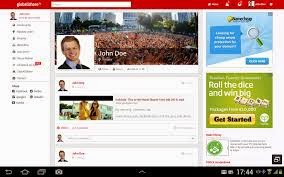
The aim of GlobAllShare is not merely to enable free use for the users, but to make them feel the global community their own and thereby they will shape it as they find it appropriate. That is why GlobAllShare ensures ownership status to each user in the form of free shares during the pre-organisation stage.
Each member of GlobAllShare, who joins to the community during the pre-organisation stage and contributes to the global growth thereof, may get GlobAllShare shares continuously all gratuitously and each month will receive dividends from the global profit in proportion of the shares owned after this venture is launched.

Have your share from the global profit

GlobAllShare shares its global profit with its users, who have contributed to the global growth and spreading during the pre-organisation period.
After the venture is launched GlobAllShare's shareholders will receive each month their dividends from 70% of the global profit in proportion of the shares owned, thus every shareholder will get a constant monthly earning.
But the shareholders of GlobAllShare will not merely get a monthly dividend, but may also sell their shares at face value, earning an immediate and large sum this way.

Get your own shares

You may also get your shares in the GlobAllShare community simply during the pre-organisation stage. All you need to do is to invite your friends and acquaintances to the GlobAllShare's website.
If you have invited 5 of your friends successfully, you will get 1 GlobAllShare share straight away. But you may not merely get shares after inviting your own acquaintances, but after each further user invited by your friends as well, moreover after your friends' acquaintances too, because through 7 subsequent levels after each of your friends, who realizes 5 successful invitations you will also get 1 more GlobAllShare share.
If you have invited 5 of your friends successfully, you will get 1 GlobAllShare share straight away. But you may not merely get shares after inviting your own acquaintances, but after each further user invited by your acquaintances as well, moreover after your friends' acquaintances too, because through 7 subsequent levels after each of your friends, who realizes 5 successful invitations you will also get 1 more GlobAllShare share.

Continuous income

After your interests in the global community of the GlobAllShare you may have a continuous monthly income, since you are paid a dividend from the global profit in each month, in proportion of the number of shares you own.
If you have invited 5 of your friends to the GlobAllShare community successfully and your invited friends also invite 5 of their friends in 7 subsequent levels following you, then you may be entitled to the following dividend in each month.
level 15 Invitees1 GAS share
level 225 Invitees5 GAS share
level 3125 Invitees25 GAS share
level 4625 Invitees125 GAS share
level 53 125 Invitees625 GAS share
level 615 625 Invitees3 125 GAS share
level 778 125 Invitees15 625 GAS share
Total 19.531 GAS share
According to the example, you may get altogether 19,531 GlobAllShare gratuitous shares, after which you will be paid a monthly dividend after the global launching of the venture. If, for instance, you are paid only $ 0.25 dividend from the global profit a month, you will get $5,000 a month. You may even get a dividend of monthly $0.5 or $1.0 after each of your shares, thus a monthly earning of $10,000 or $20,000 may easily be generated.
You can monitor the number and value of your shares as well as the sum of your monthly dividend at the WebOffice permanently.

Instant money

As a member of the GlobAllShare community you may not only get a monthly income in the form of dividends, but a large amount of money as well since you may sell your shares immediately.
After the global launching of this venture you may sell your shares at face value, thus making a large amount of money instantly. Let us take an example: if the face value of the shares is $10 after launching of the business and according to the example above you own 19,531 GlobAllShare shares, you can sell them for altogether $195,531, so you earn a great sum immediately. Obviously, the face value of the shares may easily reach $20 or $40 per share, depending on the number of persons using the GlobAllShare community portal throughout the world.
It should be noted that the users may acquire GlobAllShare shares only during the term of pre-organisation in line with their performance, therefore, at the global launching of the venture only those will have shares who contributed to the development of the GlobAllShare.
After the initiation of venture not any further shares will be issued, thus shares may be purchased from those exclusively who were involved in the global establishment of the network and received shares for their contribution.


Best regards,
The globallshare team
GlobAllShare™ World Wide © 2012-2014

Friday, 16 May 2014

Carles Puyol - A great Legend of our time........

FC Barcelona held an emotional event Thursday honoring legendary captain Carles Puyol - who will not play Saturday - as he finishes his career with the club. #respect 

http://es.pn/1gIsKDv


IHAV Fundraising PhotoShoot By IHAV Foundation

Accra-Ghana, May 14, 2014 – In just a few days, IHAV will host its 1st Fundraising Photoshoot towards creating an agribusiness revolution with Africa’s youth. This exciting event is scheduled to take place on Saturday, May 17, 2014 at the forecourt of Radio xyz in Osu, Accra.


IHAV (I have a Vision) is a non profit organization established to support youth development through capacity building and employment generation. Our focus this year is on agriculture and in the light of this, IHAV will be organizing the 2nd edition of its yearly conference through which we will engage African youth in addressing the issue of sustainability in agriculture and increasing productivity of Africa's agricultural system through research and innovation in a way that will bring about a process change and trigger an Agribusiness revolution across the continent.
The main purpose of the fundraising is to raise money to organise this very essential conference and also support youth interested in starting up enterprises in agric and related businesses.
At the fundraiser, participants will have the opportunity to take memorable pictures by two of Ghana’s finest photographers and with a few Ghanaian celebrities, and then donate an amount to support our cause.
All pictures taken on the day will be collated to make a video showing the importance of agric to our economy and why the youth should be involved. This will be posted on all media platforms to create awareness and start our revolution.
The Photoshoot will feature movie celebrities Adjetey Annan (Pusher), Bismark Odoi, and Juliet Ibrahim. We will also have star TV personality Nana Aba Anamoah, and models Laurie Frempong, Olivia Lawson and Jackie Turkson. Photographs will be taken by our star photographers Kwame Pocho and Kwaku David, and UNICEF photographer Ekoue Walter.
This is certainly a must-attend event for everyone interested in youth development, youth in agric initiatives, and youth empowerment. We also invite fans of the stars and photographers to come interact and experience their works.
Beyond this event, IHAV Foundation continues to provide platforms like periodic forums, student ambassador programs, and annual conferences for sharing ideas and developing new projects and initiatives geared towards fulfilling societal needs and creating employment.
Sponsors, partners and benevolent individuals are warmly invited to come support us raise money to inspire, nurture and support young people to be more involved in agriculture.
SIGNED:
Christabel Ofori
Founder & Executive Director
+233 243 650790

Wednesday, 26 February 2014


  • Mr. President,
  • Mr. Secretary General,
  • Your Excellencies,
  • Ladies and Gentlemen.
In accordance with Ghanaian tradition and custom, I would like to begin with a basic but essential courtesy to express, on behalf of the government and people of my beloved country, our deepest gratitude and most profound appreciation to the United Nations, and to the numerous world leaders who mourned with us following the sudden and untimely death of our former president, Professor John Evans Atta Mills.
Ghanaians were touched by the many heartfelt messages of condolence and glowing tributes that poured in from all over the globe. Those messages of goodwill strengthened us and enabled us to transcend the adversities of an occurrence that was unprecedented in the history of Ghana.
Professor Mills was a dedicated and honourable statesman. He committed himself to bringing about an improvement not only in the lives of Ghanaians but also in the lives of all other Africans and indeed the lives of individuals throughout the world. His death was a significant loss and I am certain that he will be sorely missed by the international community.


What Should HR Leaders Focus On In 2014?

The main focus for most organizations in 2014 should be on talent management and talent development, particularly the managerial and technical roles that are the difference makers.  One of the major reasons to focus on talent is that it is a great way to get the HR function into a broader discussion about what is next for the organization and what the business strategy should be. Positioning the HR function and talent management to contribute to the overall effectiveness and financial performance of the organization is the best way the HR function can add value to corporations.

The most important thing that HR should focus on in talent management is assessing the skills the organization needs to implement its strategy and the plan for recruiting and managing that critical talent. It is important to understand what the organization can do to add the right talent: Whether it is best recruited or best internally developed, and whether it is even possible to develop the right talent in order to implement business strategy. Understanding the availability of talent in combination with knowing how it is critical for the business strategy should lead to a more interactive relationship between the strategic choices of the organization and how its talent is trained and managed. Often, the reasons why business strategies fail is that they mistakenly assume that the organization can get the right talent in order to perform the way the strategy calls for. All too often organizations cannot attract or develop it, and as a result, the strategy is not feasible.
Talent has always been important, but it has increasingly become more critical because so many organizations are doing much more complex, knowledge-based work and operating globally. This has created a situation where the performance of talent has a major impact on the bottom line. The difference in many critical jobs between good talent performance and poor talent performance is 100 to 1. That reality is increasingly causing knowledge work-based organizations to focus on talent as a source of competitive advantage.
Google GOOG +0.69% is a good example of a company that has done an exceptional job of recruiting and managing people who have critical knowledge skills. It needs talented people to perform well and that translates into how they communicate about the kind of talent they are looking for and the jobs they offer. Further, they identify critical positions in the organization, where performance can differentiate them from their competitors. They make sure they fill those jobs with the right talent. This is an important and critical part of the whole recruitment and selection process. In the selection process, they ensure that they test for the ability to develop the key skills that are needed for the job.
Decades ago, Google, like 3M MMM -0.2%, began giving everybody 10-15% free time to work on their pet projects. People have used this time to come up with new business ideas and business projects. They have created work that fits the talent of the people in the organization, and they have attracted talented people to come to work for them. This allows them not only to implement their business strategy but to also grow and develop their business strategy based on the skills of their employees and their ability to attract top talent.
Why aren’t there more organizations that focus on talent? Some business leaders think they can live without top talent. Others believe talent management is important, but they do not see it as important as finance or technology. Finally, many executives are unable to see the relationship between talent issues and the business strategy of their organization. Many executives do not have a background in talent management. They are trained in finance or engineering and they see them as the major determinants of organizational performance. The challenge for HR is not just to establish the importance of talent, but it is to link talent management to the business strategy.

Second Income Business

Hi Reader,
As you are into your own business/
looking after, I would like to
introduce TripleClicks' ECA (E-
Commerce Associates) program.
This is a really exciting program
because it allows you to increase your
sales without any risk (there's
absolutely no cost to you unless we
get you sales).
Basically, you'll just list your
products and/or services at
TripleClicks.com and fulfill the orders
we generate for you. You'll also like to
know that we've made it very simple
and easy to enter your listings.
For more details visit - http://www.tripleclicks.com/12086774/ECA
Let’s hope that TripleClicks can
become a successful new outlet for
your business soon.
Thanks & Regards
Kaaba Yahaya
kaabencyclo@gmail.com

The EASIEST Money You will EVER Make !

Please don't miss out on this FABULOUS and simple program.
If you believe you have seen it all...
The "FEEDER MATRIX" pays you instantly and directly to your Paypal, Paysza or STP accounts! 
Make a wise decision NOW!
ONLY $1.75 to join!  NO RISK!
Click Link Below For Complete Details:
http://www.feedermatrix.com/?ref=kaaba

Sunday, 15 December 2013

Discover How You Can Plug Into Our Proven System Today...Absolutely FREE!

Discover How You Can Plug Into Our Proven System Today...Absolutely FREE!

Would you rather spend your hard-earned money and all of your precious time
cold-calling dead-broke leads? Would you rather waste your day convincing
your team to just "stick it out" -- the rewards are coming "some day soon"?

Or would you rather wake up every morning to an inbox filled with new
prospects, distributors, and even cash? Hey... It's the Internet Age! Wake
up already -- that day is here!

We know how to achieve the kind of massive success that you have been
dreaming about. Whether you have tried and failed, are now trying but
failing or whether you are succeeding but falling far short of the
promised rewards, we have the answers.

You see, we know how to do some things when it comes to this industry that
most people would give their right arm to learn. In fact, 99% of online
marketers don't have a clue about how to do what we do.

And what is it we do, you might ask?

We call it BetterWebBuilder. This system has literally made us $1,000's,
and allowed us to produce 1,000's of leads - all online, and all on auto-pilot.

(You gotta love the internet...)

Yes, There Is A MUCH Better, Easier Way To Build A Successful Home Business!
We are part of a new wave of online marketers, who use none of the
"Old School" tactics you have probably been taught to use. Yet we have
exploding businesses, and more people to network with every day than even we
know what to do with.

Here's the three reasons why we succeed, while most people don't:

1. Technology (We Use The Internet To Leverage Our Efforts).
2. Duplicable Systems (We Do NOT Try To Duplicate People).
3. Community (We Create a Place Where Everyone can Share Their Knowledge).

We would love nothing more than for you to come up to SPEED and start using
THE most cutting edge system available in the market place to rake home
serious cash in your business.

But don't take our word for it. Find out for yourself. Join for FREE and you
can start earning up-front cash immediately (Yes, even as a FREE member).

You can use all of the tools for FREE, take advantage of our Experience for
FREE and be on your way to the high-powered income that is available to
everyone who just taps into this system.

If you would like to find out more, just visit:

Networkers with Phone

 
Online Presentation

 
  Online Presentation / Phone


Saturday, 28 September 2013

CashUnite - A Revolutionary New Way To Earn Money From Your Social Networks!

CashUnite - A Revolutionary New Way To Earn Money From Your Social Networks!

Africa, emerging economies and globalization

Africa’s economies are consistently growing faster than those of almost any other region – and at twice the rate of the 1990s. This has led to improvements in several areas such as trade, mobilization of government revenue, infrastructure development, and the provision of social services. Indeed, over the last decade, Africa has been among the fastest growing regions in the world economy, and it is interesting to note that this improvement in growth performance has been widespread across countries.

Just some few years ago, news on Africa, whether the reality or perception, has suffered from extreme mood swings, with the pendulum moving from episodes of pessimism to bouts of euphoria. But what really is the case in Africa?

The impressive economic and political performance of Africa since the turn of the century has led to the description of the continent as “the hopeless continent” changed into others such as “Africa rising: the hopeful continent”, “Lions on the move: blazing a pathway to prosperity”, “Africa’s rising middle class”; “dynamic African consumer market”; “Growth opportunities for investors” etc.

The extreme pessimism surrounding Africa a decade ago was unwarranted. Can we say the same is the current wave of blinkered optimism? Real gains have been made, but governments and their development partners need to reflect on the weaknesses, as well as the strengths, of the recent record – and assess both the risks and the opportunities that lie ahead.

Exports are booming and export markets have become more diversified. Foreign direct investment has increased by a factor of six over the past decade. Private entrepreneurs have emerged as a dynamic force for change, driving innovation and transforming outdated business models. There is an emergent middle class, although its size is often exaggerated. For the first time in over a generation, the number of people living in poverty has fallen. Fewer children are dying before their fifth birthday and more are getting into school. Steadier exchange rates, robust commodity prices, increased private capital flows and modest inflation are experienced in Africa. Africa has got a very good fiscal story with debt to GDP ratios at the sovereign level which are no where near the burden of what is seen in Europe, United States and other parts of the world.

Africa as part of the emerging economies is not immune to the economic and political currents that are reconfiguring globalization. Emerging economies are countries that are restructuring their economies along market-oriented lines and offer a wealth of opportunities in trade, technology transfers, and foreign direct investment. These are nations with social or business activity in the process of rapid growth and industrialization. Each of these countries is important as an individual market and the combined effect of the group as a whole is capable beyond all doubts to change the face of global economics and politics.

Emerging markets are regional economic powerhouses with large populations, large resource bases, and large markets. Africa currently has a population of over 1 billion people. This is indeed an asset for Africa to leverage on and this also means a large market for domestic goods. Africa is again blessed with resources beyond measure with most of these resources untapped. Africa is capable of transforming the lives of its citizen if it can add value to its raw resources. Africa can indeed be a frontier in emerging markets with a strong labor force due to its youthful population. Africa can boast of a population with about 60% to 70% youths and this is enough for the continent to attract the necessary economic success it so desires. This is really an opportunity for the African continent to transform from economic growth to economic transformation. Africa, just as any emerging economy are sought by investors for the prospect of high returns, as they often experience faster economic growth as measured by GDP.

Emerging economies are experiencing a rising middle class. A rising middle class means a larger domestic consumer market as they tend to demand more compared with the poor. The rising middle again means helping to shape political policies in those countries this is because, the middle class are more likely to hold governments accountable for policy decisions.

As pointed out early on, Africa as part of the emerging economies is not immune to the economic and political currents that are reconfiguring globalization. Therefore, leaders need to find a place in the global economic governance architecture of a multipolar world. Africa’s own demography and human geography are changing, hence, failure to create jobs and opportunity for a growing and increasingly urbanized and educated youth population would have catastrophic consequences, socially, economically and politically.

Globalizations have taken many trends in our world; most importantly is the integration of nation’s economies to promote an increase in world’s output. At the start of the new millennium, human development is again at a crossroad. The 21st century will be moulded by the development choices that we make in its functional years. The present era of globalization is characterized by the following distinctive features: shrinking spaces, disappearing borders and the growing of interstate inequality and inequality within states. The globalization process is linking people’s lives more deeply, more intensely and more immediately than ever before. It is not only about integrating economy, but also culture, technology and governance.

Globalization in its current form, presents a universal challenge, a challenge not only for each country, but for the institutions of global governance as well. Globalization is here and no country or institution can escape it. However, the essential question is how to manage the process. Therefore, we need to question different forms of regulation at the national, continental as well as the global levels.

Globalization can unleash the positive forces of the global market if effective public action is taken at the national and international levels to develop the institutions and policies that would bring about inclusive growth. In addition, globalization can also facilitate the unleashing or our combined efforts and expertise to reach global solutions to major socioeconomic problems. In an increasingly interdependent world, the manifestation of extreme poverty and the growing gap between the rich and the poor decrease the prospects for global integration and the peacekeeping, the budgetary crisis it has faced over the years, the chronic political conflicts, once between the East and the West and now between the North and the South.

Times are uncertain. But what is increasingly evident is that Africa is on its way to becoming a preferred investment destination, a potential pole of global growth, and a place of immense innovation and creativity. If we respond with courage and in the right way, building on the continent’s many successes, African societies will become more prosperous, fair and equal. This is a prize which we all, wherever we live, will share.

Blame IMF, World Bank for Ghana's economic crisis – Kwesi Pratt

Managing Editor of the Insight newspaper, Kwesi Pratt Jnr., is blaming the World Bank and International Monetary Fund (IMF) for the current economic crisis the country is facing.

He is of the view that successive governments have been paying too much attention to reports from the two bodies and questioned why they (government) follow those reports to the latter.

“IMF and World Bank are equally responsible for the mayhem in our economy…Between 1983 up to now, our national currency has devalued by 27,000%. In an era where you have massive devaluation of the national currency, every industry needs recapitalization. The IMF pushed us to devalue and our government recklessly accepted to devalue at a time when credit was not available from the financial institutions,” he told Kwami Sefa Kayi, host of Peacefm’s “Kokrokoo” Morning Show.

According to him, because government accepted that policy, it led to the collapse of so many companies in the country, adding “this will tell you how bad the policies of IMF are…before, we had Swedru contractors, KE and sons and so on. Where are they today? It is an illustration of how bad IMF policies are. And government didn’t help matters either. Principally, the policy itself was a major problem.”

Thursday, 15 August 2013

15 ways to better Facebook Marketing for your business


<span class='CUBanner728x90' title='Kaaba' ></span>
Everyone, absolutely everyone, seems to be using Facebook now. According to Facebook's own statistics, people spend more than 700 billion minutes monthly on the platform. Wow!

Therefore, it's essential that your company explore ways that your audience segments are using the social networking platform and develop a corresponding plan. Too many companies merely configure a Facebook Page, randomly post to it until they get bored, and then leave it to gather dust for months at a time.   
What would it mean to your business if you instead developed a clear Facebook Marketing strategy and then executed on it with precision? What would it mean to your business if you thrilled your prospective clients on Facebook? The potential marketing opportunity on Facebook is tremendous for many businesses, and quite possibly for yours!
It's not that Facebook replaces your other forms of marketing. But your prospective customers ARE spending time somewhere. And you want to connect with them and increase the time they spend with your brand. And so if they are on Facebook, and if they are on Facebook A LOT, it behooves you to develop a plan to interact with them on Facebook in a way that adds value to their experience.
To that end, here are 15 ways to better Facebook Marketing for your business:

<A HREF="http://www.sfi4.com/12086774/FREE"><IMG SRC="http://www.sfimg.com/Images/Banners/banner290.jpg" border="0"/ ></A>

1. Decide Why You Have a Facebook Page

As with any marketing vehicle, to maximize returns for your business you want to understand why you are doing the marketing in the first place, define your marketing goals, and develop a corresponding strategy. Your audience may value Facebook as a customer service vehicle for your business. In other cases, it might be an appropriate content or news source. In other cases, an appropriate sales source. In other cases, your fans may just want to "talk" with you and feel a part of it all. Align your Page to your strategy, and define associated success metrics.

2. Create Custom Tabs

When you start your Facebook Page for your business, your Page has a standard set of "tabs," including a Wall where posts and comments are published and an Info tab with general information about your company. You can extend the capabilities of your Facebook Page by creating custom tabs. For example, the StartupNation Facebook Page includes a "Welcome" tab  with links to various types of content and products, and with a promotion for the currently-running Leading Moms in Business Competition. You can actually submit your entry through another custom tab. (Note: The competition has now ended, and so this particular tab has been replaced with a Twitter tab and an email newsletter sign-up tab.) 

3. Edit Your Tab Order

Your Facebook tabs appear in vertical order on the left side of your Page. Right under the list of tabs is a small "Edit" option. You can use this to customize the order of your tabs (outside of the Wall and Info tabs). This is useful especially if you want a certain tab towards the top, or all the way at the bottom of the list so that it stands out more. With the StartupNation Facebook tabs, for example, the "Welcome" tab has been placed just below the Wall and Info tabs, and the Leading Moms in Business Competition tab at the bottom of the list. (Note: Since the time of this writing, an email newsletter sign-up tab is now placed at the bottom of the list, given that the competition has ended.) 

4. Post More Than Once a Century

We've all seen them. Facebook Pages where the business was overly excited when setting up their Page, with 7 posts the first day, and then no more posts the following three months. Just as with any marketing for your business, if you are going to do it, then do it well. By ignoring your Facebook Page for months at a time, you send a message to your audience that you just don't care. So decide if a Facebook Page is something your business needs, and if the answer is yes then at least stick to some type of posting schedule.

5. Use Facebook Ads

Paid advertising in Facebook is a great opportunity for your business in that Facebook enables you to target your audience for your ads in many ways. You can specify the age group, gender, and geographic area of those that will see your ads. Not only that, you can specify the specific interests of your audience as broadly or as narrowly as you'd like. You can set your bid price and campaign budget, and test as many ad images, headlines and ad copy as your heart desires. And if you decide that your campaign is just not working, you can stop the campaign immediately, thus lowering your risk of overspending on your campaign.

6. Get 'Em to Sign Up

Giving your audience something of value in exchange for a registration or sign-up can be valuable to your business, as it enables you to have an ongoing conversation with those who have expressed interest. So, hold a competition or sweepstakes, or simply offer a sign-up form for something of value in return. 

7. Send an Update

Facebook Page Administrators are able to send messages to everyone who "Likes" their Page. So when you have something of value to let your fans know about, send out an update and make them aware. Just be very prudent with the frequency of this technique. Send stuff to your fans only when it really matters.

8. Have a Dialogue

If someone takes the time to comment on your Facebook Wall, answer them. Think about it, if someone calls your business, you answer the phone and you answer their questions. Same with email. Same with a form submission from your website. And it's the same with Facebook.

9. Go Beyond Your Page

Facebook now enables you to navigate through Facebook "as a Page." Therefore, you can post to other Facebook Pages that you "Like." (Note, this is only for Pages for which permissions have been configured to allow third-party posts.) Just be extra careful with this, as you should post to another Facebook Page ONLY when you have something of true value to add. And be very respectful of the Page owner. DO NOT SPAM. It's just bad marketing.

10. Use It as a Content Platform

<A HREF="http://www.sfi4.com/12086774/FREE"><IMG SRC="http://www.sfimg.com/Images/Banners/banner165.gif" border="0"/ ></A>
Use Facebook as a publishing platform and as a channel for extending the reach of your content. If you write a blog post, update your Facebook Page and let the world know about it and have access to it. Not everyone is going to visit your blog everyday. The more that you can write once and publish in multiple locations, the more likely that your valuable content is going to reach your audience.

11. Make it "Shareable"

What can you offer your audience that's of value? That they would want to tell their colleagues about? Facebook is all about sharing and interacting with others. If you truly focus on giving as much value to your prospective customers as possible, they will return the favor by letting others know and providing their own network with the opportunity to experience such value. For example, this could be an eBook, an exclusive offer, a cool competition, etc. It can even be just deliciously awesome content.

12. Make Some Stuff Exclusive

We humans are funny. We often want what's just out of reach. (Heck, it makes life more fun that way!) So dangle something of value to your prospective audience but make them "Like" your Page in order to get it. They win. You win. Everyone wins. For an example of this, with the Leading Moms in Business Competition tab in the StartupNation Facebook Page, prospective entrants can get a free eBook jam-packed with advice for mom entrepreneurs as long as they first "Like" the StartupNation Page on their way to entering the competition.
<A HREF="http://www.sfi1.biz/12086774"><IMG SRC="http://www.sfimg.com/Images/Banners/banner447.gif" border="0"/ ></A>

13. Turn Fan Activity into Advertising 

With Facebook Sponsored Stories, a business can essentially turn fan activity into advertising. Sponsored Stories, available in the Facebook self-serve ad tool, enables you to promote your business by displaying positive fan updates that specifically mention your business, or to promote news feed stories about a viewer's friends "Liking" your Page.

14. Leverage Facebook Insights

Facebook Insights is a set of analytics that tracks usage and interaction with your Facebook Page. It's available free to every Page administrator. Leverage the Insights data by seeing how people are using your Page. What content is of most interest? What is just not resonating? And then adjust your Page activities accordingly.

15. Integrate, Integrate, Integrate

As with any marketing, individual efforts in a silo are rarely the most effective way to go. Instead, integrate your marketing wherever possible. For example, with StartupNation's Leading Moms in Business Competition, the look & feel as well as the messaging, etc. are consistent across the website, Twitter feed, email newsletters and Facebook Page. Your campaign is sure to be more successful, the more integrated you make it.
So, figure out how your Facebook Page can best serve your audience, and then knock 'em out with amazingly valuable stuff. Be crazy good!!! Your customers and prospective customers are sure to appreciate the enhanced experience, and your business is sure to benefit.
<A HREF="http://www.sfi4.com/12086774/FREE"><IMG SRC="http://www.sfimg.com/Images/Banners/banner402.jpg" border="0"/ ></A>